
The legendary Media Lab of the Massachusetts Institute of Technology, popularly known as MIT, celebrated the 30th anniversary of its establishment at the end of October. There are hardly any other higher education institutions, perhaps with Stanford as an exception, that have exerted as powerful an impact on information and communication technologies as the laboratory in Cambridge,
Breaking with the narrow engineering approach that is still adopted by many tech universities, Media Lab’s permanent success lies in the fusion of disciplines such as technology, multimedia, design, arts, and sciences, fields which were deemed incompatible earlier on. At the time of its establishment in 1985, Media Lab (www.media.mit.edu) was already the vanguard of arts and sciences, which is a flourishing trend today, and the frontline fighter ever since. Media Lab researchers deliver workshops all over the world, and have introduced creative interdisciplinary approach in many developing countries, including India for instance.
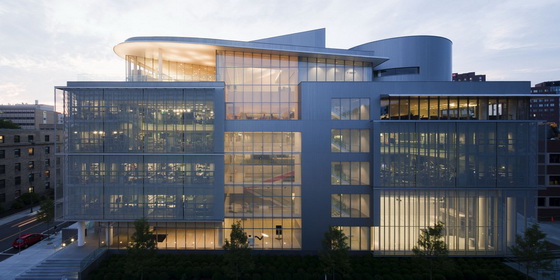
The laboratory was established by former MIT director Jerome Wiesner and Nicholas Negroponte, renowned for the slogan “move bits, not atoms”, the bestseller Digital Being, and the One Laptop per Child project. Founders also included Seymour Papert, one of the pioneers of advances in artificial neural networks research in the 1960s, and “fellow fighter” of Marvin Minsky, the iconic figure of MIT and AI.
The institution became a part of popular culture in the 1990s with the breakthrough of the internet, and through the foundation and publicity of tech business magazines such as Wired and Red Herring, which were to shape public thinking. Negroponte was perfectly right in his assumption that the cyberdelia of Mondo 2000 would be translated into commonsense PC language and would be integrated into the mainstream by Wired. Negroponte was the first to invest in Wired, where he expanded the ideas of the digital revolution with monthly regularity between 1993 and 1998. In the meantime, Media Lab attracted attention with a range of practical developments such as wireless networks, sensing technologies, web browsers and various other internet solutions. The foundations for electronic reader technology, the forerunner of Google Glass, were laid here, and the bionic artificial leg or the Guitar Hero, an absolute success in game history, were also invented at Media Lab.