

British mathematician Tommy Flowers (1905-1998), who designed the prototype of Colossus, took an active part in codebreaking in World War Two.
Press release
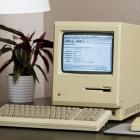
Jeff Keacher, a software consultant in Denver, decided to embark on an especially challenging IT project that he had set for himself: getting his 27-year-old Macintosh Plus computer connected to the worldwide web.

On 20 December 1943, Thomas Watson Jr., informed James B. Conant, that America’s pioneer in the design profession, Norman Melancton Bel Geddes, create the case for IBM’s forthcoming electro-mechanical computer.
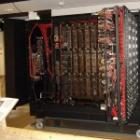
Enigma (Greek word meaning mystery or something puzzling) was a German manufactured electro-mechanical rotor machine that was used to cipher and decipher messages.

On 9 December, the renowned Computer History Museum in Mountain View, California paid a tribute to Douglas Engelbart, who passed away at the age of eighty-eight on 2 July.

The mathematician Norbert Wiener, the “originator of cybernetics” was born on 26 November 1894 in Columbia, Missouri State.

The announcement that development work on Winamp would be discontinued was received with great sadness web-wide.

Similar to chess, Archon, in which users fought battles, was one of the “stars” of the Commodore 64 epoch. It was developed by Free Fall Associates, and distributed by Electronic Arts.

Founded in 1887, J. Lyons and Co. was a British restaurant chain, food manufacturing and hotel conglomerate.

The Computer History Museum in Mountain View has announced that the source code of the DOS 3.1 version released in June 1978 for the legendary Apple II, has been made available for non-commercial use with permission of Apple Inc. and programmer Paul Laughton.